
AI-Powered Agents vs. DialogFlow Bots: Revolutionizing Technology
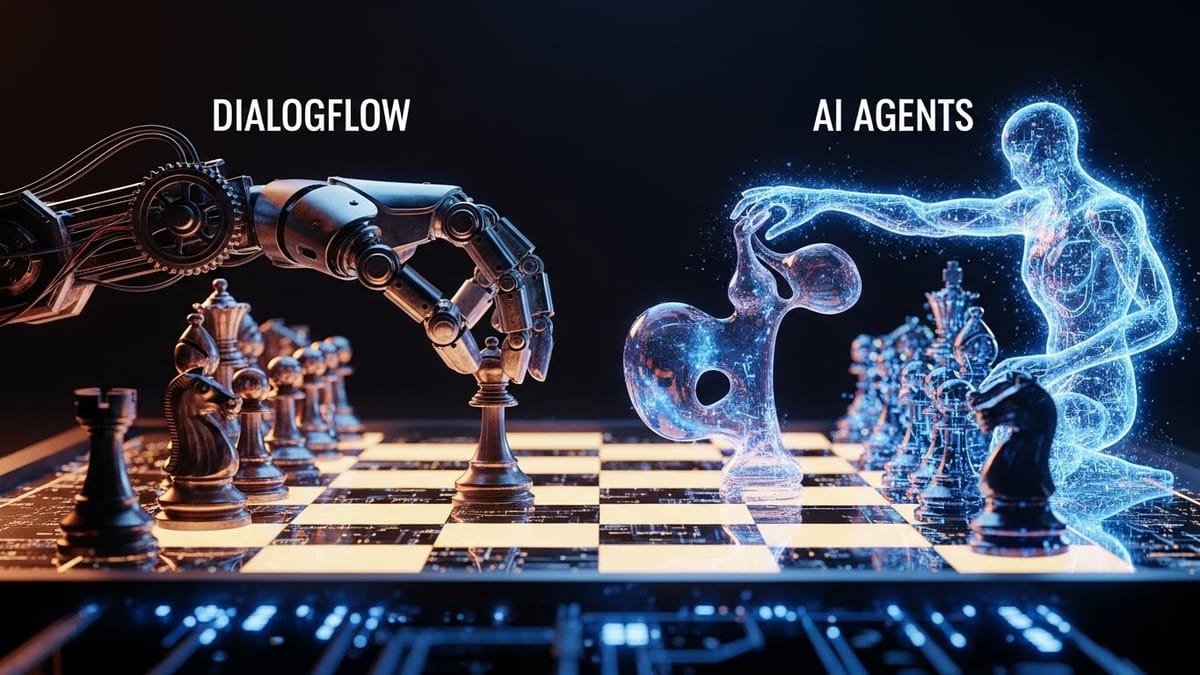
In today's fast-evolving tech landscape, AI-powered agents and DialogFlow bots represent the forefront of digital communication. These revolutionary technologies are transforming how businesses interact with their customers, offering enhanced user experiences and operational efficiencies. This blog aims to explore the key differences between AI-powered agents and DialogFlow bots, catering to our audience of tech enthusiasts and industry professionals.
Understanding AI-Powered Agents
AI-powered agents are software applications that leverage artificial intelligence to perform tasks traditionally executed by humans. These agents are capable of learning from interactions, understanding natural language, and making autonomous decisions. Notably, they can conduct web searches, perform customer service tasks, and assist in complex problem-solving scenarios. An example of their impact is evident in areas like web browsing, where Amazon's lawsuit against the startup Perplexity highlighted the competitive tension in AI-driven technologies (The Week, Nov 2025).
Exploring DialogFlow Bots
DialogFlow, developed by Google, is a conversational AI platform that facilitates interaction through natural language understanding. Designed for creating chatbots, it's particularly favored for its integration capabilities with various platforms and its robust natural language processing (NLP) engine. DialogFlow bots help businesses automate customer interactions, handle inquiries, and triage customer issues efficiently, which is crucial in fast-paced environments.
Comparing Capabilities
The primary distinction between AI-powered agents and DialogFlow bots lies in their capabilities and applications. AI agents tend to offer a broader range of functionalities, including autonomous decision-making, while DialogFlow bots focus on structured conversations and predefined workflows. For instance, Verint’s AI-powered bots are recognized for their leadership in the conversational AI space, mastering complex customer engagement scenarios (Business Wire, June 2025).
Pros and Cons
- AI-Powered Agents: Highly autonomous, adaptable to various tasks, but can be complex and resource-intensive to develop.
- DialogFlow Bots: Easier to implement, highly integrative, but may require more rigid structuring and predefined pathways.
Future Prospects
As we move forward, the line between AI-powered agents and DialogFlow bots may blur, with improvements in AI leading to more sophisticated, integrated, and intuitive user experiences. As noted in industry discussions, the potential for AI-driven systems to dominate digital networks is significant, heralding a shift towards more machine-driven processes (MSN, Aug 2025).
The continuous evolution of these technologies underscores their significance in the digital domain, where efficiency and improved user interaction are paramount. For tech enthusiasts and industry professionals, understanding these differences facilitates informed decisions in deploying AI technologies to meet business needs.
Overall, both AI-powered agents and DialogFlow bots offer transformative potential, but choosing between them requires a nuanced understanding of their capabilities and strategic alignment with organizational goals.